The Hampton Album: A Class in American History (1899–1900)
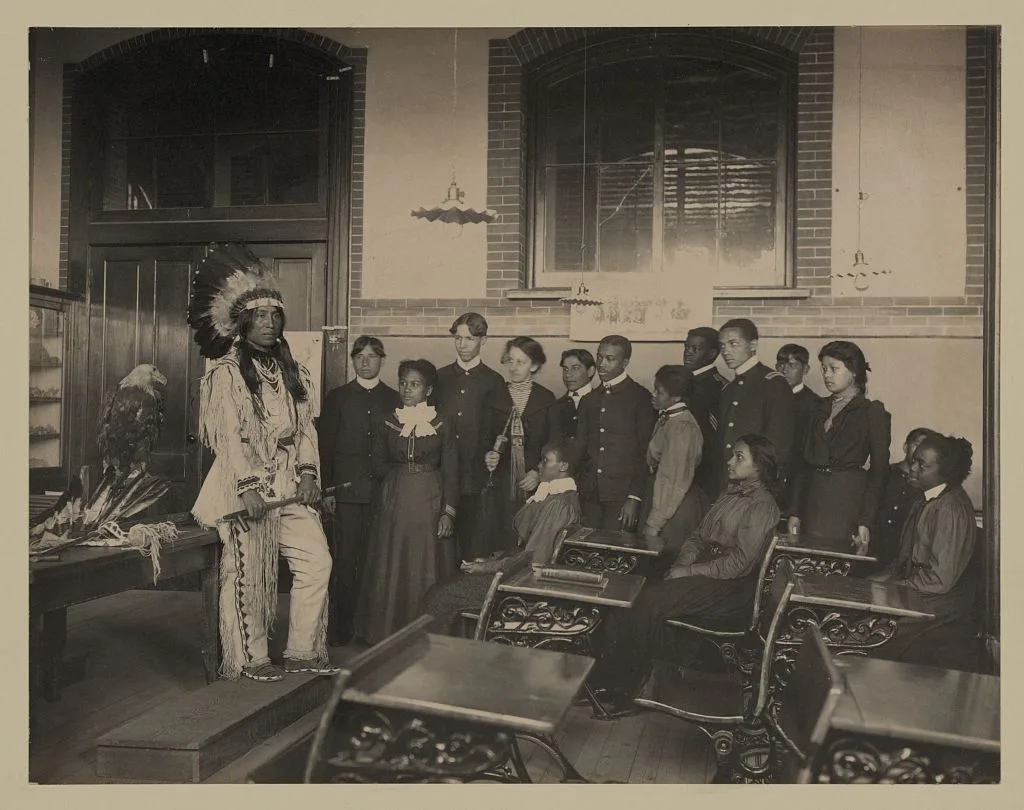
In December 1899 and January 1900 Frances Benjamin Johnston photographed classes, workshops and student life at Hampton Normal and Agricultural Institute in Virginia for display at the 1900 Paris Exposition. The series, known as the Hampton Album, is her most studied body of work. This page covers the series and its most discussed image, a history class in which Louis Firetail, a Crow Creek Sioux student, stands in traditional dress before his classmates.
- Date
- December 1899 – January 1900
- Place
- Hampton Normal and Agricultural Institute (now Hampton University), Hampton, Virginia
- Commissioned by
- Hollis Burke Frissell, principal of Hampton Institute
- Exhibited
- American Negro Exhibit, Exposition Universelle, Paris, 1900
- Size of series
- About 150 photographs; the album at the Museum of Modern Art holds 159 platinum prints
- Featured image
- Louis Firetail (Crow Creek Sioux) in an American history class; gelatin silver print, Library of Congress
- Also known as
- Hampton Institute photographs; The Hampton Album; A Class in American History; Louis Firetail in American history class
The commission
Hampton Normal and Agricultural Institute was founded in 1868 to educate formerly enslaved African Americans, and by 1900 it also enrolled Native American students. In 1899 the school's principal, Hollis Burke Frissell, commissioned Johnston to photograph its buildings and students. The pictures were meant to demonstrate the success of Hampton's program of academic and industrial training to an international audience at the 1900 Exposition Universelle in Paris.
Johnston came to the job straight from another educational project. In the spring of 1899 she had photographed the public schools of Washington, D.C., and a Library of Congress curator has suggested that this commission likely led to the Hampton work. She spent several weeks on the Hampton campus in December 1899 and January 1900, photographing classes, workshops and buildings, and graduates in their homes. The finished prints in both major collections were made in platinum.
Paris, 1900
At the Paris Exposition, Johnston's Washington school pictures hung in the Palace of Education, while her Hampton photographs went into the American Negro Exhibit in the Palace of Social Economy. That exhibit was organized by Thomas J. Calloway, Daniel A. P. Murray and W. E. B. Du Bois. According to the Library of Congress, Du Bois's now-famous data charts and the Hampton photographs were mounted back to back in folding cabinets. Johnston's school and Hampton photographs were among the work honored with awards at the exposition, and some Hampton pictures were also shown at the Pan-American Exposition in Buffalo in 1901.
The Museum of Modern Art in New York holds 159 photographs from the commission that were once bound together as an album. The Library of Congress holds largely the same work, also in platinum, along with additional views Johnston made near Hampton but off campus, such as students working at the Newport News shipyard. Accounts of the size of the series therefore vary slightly; historians Pete Daniel and Raymond Smock described it as about 150 photographs.
A Class in American History
The best-known single image from the commission shows a history lesson. At its center stands a young man in traditional dress beside a bald eagle, while the class looks on; the Library of Congress subject headings for the print include headdresses and calumets, or ceremonial pipes. The Library identifies him as Louis Firetail of the Crow Creek Sioux. Encyclopedia Virginia, which reproduces the Library's print and dates it 1899 or 1900, captions him as a Crow Creek Sioux tribal member wearing traditional clothing in an American history class. In the Hampton series the picture is usually titled simply A Class in American History, without his name.
Daniel and Smock called this "the most intriguing of the Hampton photographs," and it is one of the most reproduced. The reason is the picture's contradictions. A Native student at a school devoted to remaking its students' lives appears in traditional dress, presented as a subject in a lesson on American history for his classmates to study. The scholar Laura Wexler described the image as a "virtual maelstrom of conflicting currents." Whether Firetail chose the role, was asked to perform it, or both, the photograph does not say, and the viewer is left to weigh whose history the lesson is about.
How to look at the Hampton photographs
Johnston's Hampton pictures were made to persuade. Students are shown at work in classrooms and shops, in scenes arranged to show discipline and progress. Johnston also paired photographs of rural Black families in poor housing with views of prosperous Hampton graduates at home, building a before-and-after argument for the school's method. Daniel and Smock summarized the message as upward mobility through industrial education and Christian piety in the Hampton style.
Modern viewers often read the series two ways at once: as a rare, detailed record of Black and Native students at the turn of the century, and as institutional publicity shaped by the assumptions of its white sponsors. Some archival titles reflect those assumptions. One photograph in this archive is catalogued with the original caption "before entering school - seven Indian children of uneducated parents," wording that presents the children's families as a problem the school would solve. The caption is kept here because it is the historical record, but it reflects the school's view of the children's families rather than a neutral description.
Which photographs this archive holds
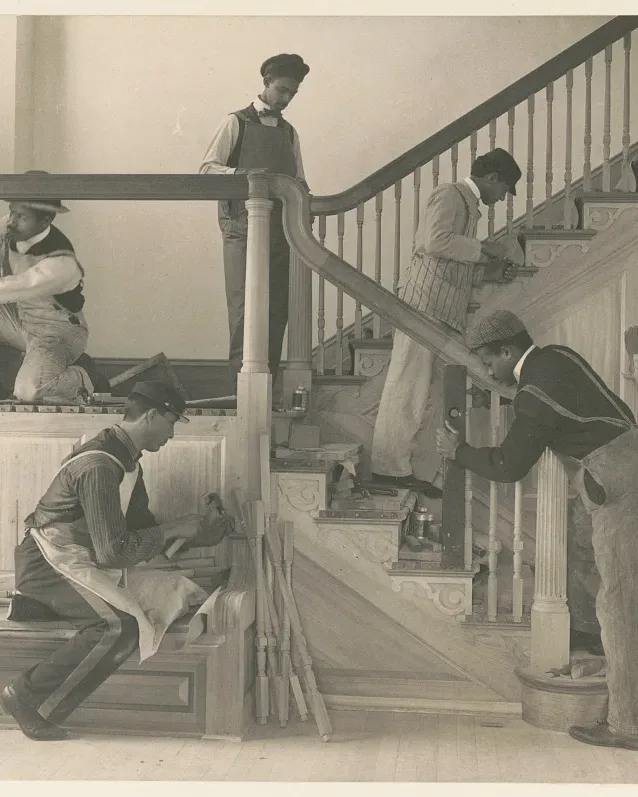
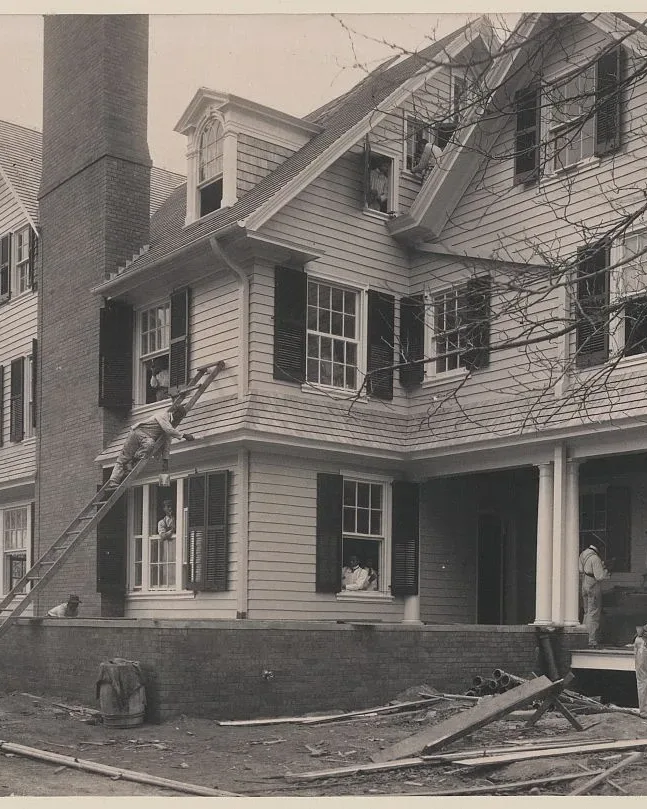
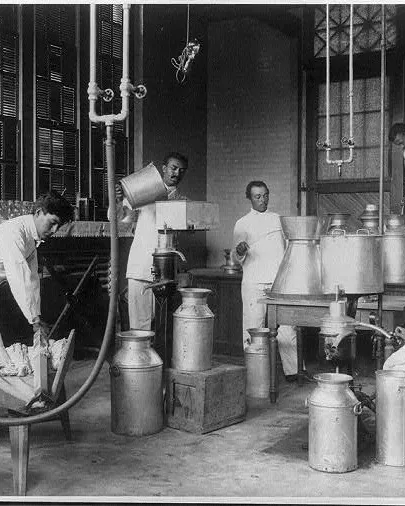
The featured image on this page is the Library of Congress gelatin silver print catalogued as "Louis Firetail (Sioux, Crow Creek), wearing tribal clothing, in American history class, Hampton Institute, Hampton, Virginia" (item 98502982), dated 1899. Because this page is about the series, it also links the other Hampton photographs in this archive: students building a stairway in a house they constructed (two Library records, one a platinum print on board), five men making butter, women weaving a rug in a home economics class, a bricklaying class, a dressmaking class, students constructing telephones, the posed group of seven Native children photographed before entering the school, the Memorial Church and Academic Hall seen across the Hampton River, and students at work at the Newport News shipbuilding company. The Museum of Modern Art's album, published as The Hampton Album with text by Lincoln Kirstein and exhibited there in 1966, contains its own platinum prints of the series.
Other versions in the archive
Students at work on a house built largely by them
1899
Students at work on a house built largely by them
1899
Five men making butter in a class at Hampton Institute,…
1899
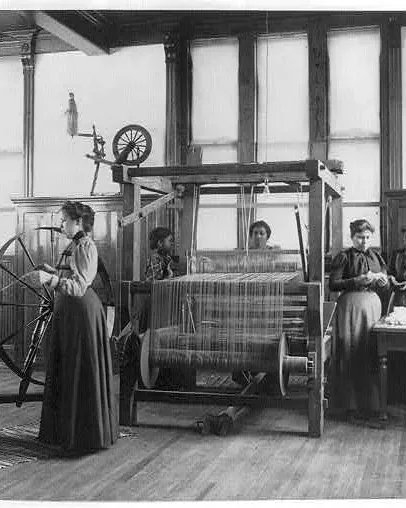
[African-American women weaving rug in home economics class…
1899
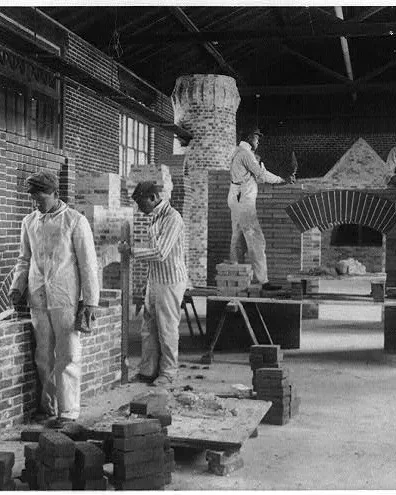
[Students in a bricklaying class, Hampton Institute,…
1899
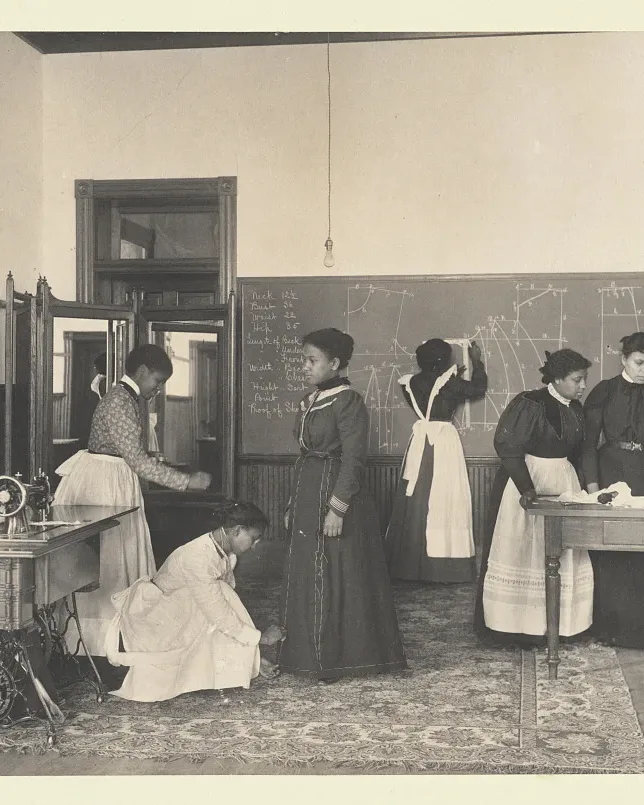
[A class in dressmaking, Hampton Institute, Hampton,…
1899
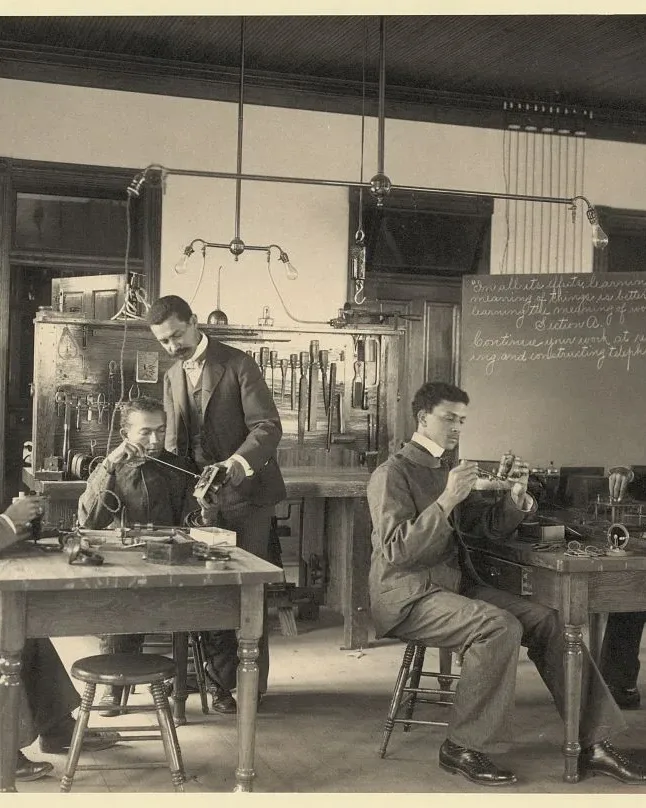
[Students constructing telephones at Hampton Institute]
1899
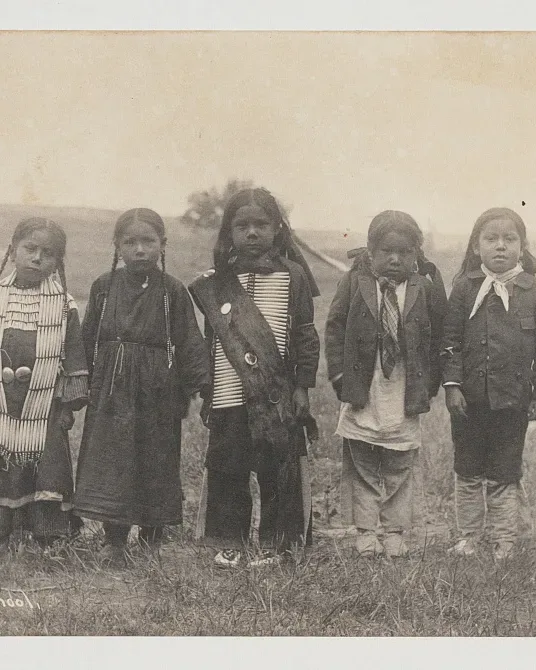
[Hampton Institute, Hampton, Va. - before entering school -…
1899
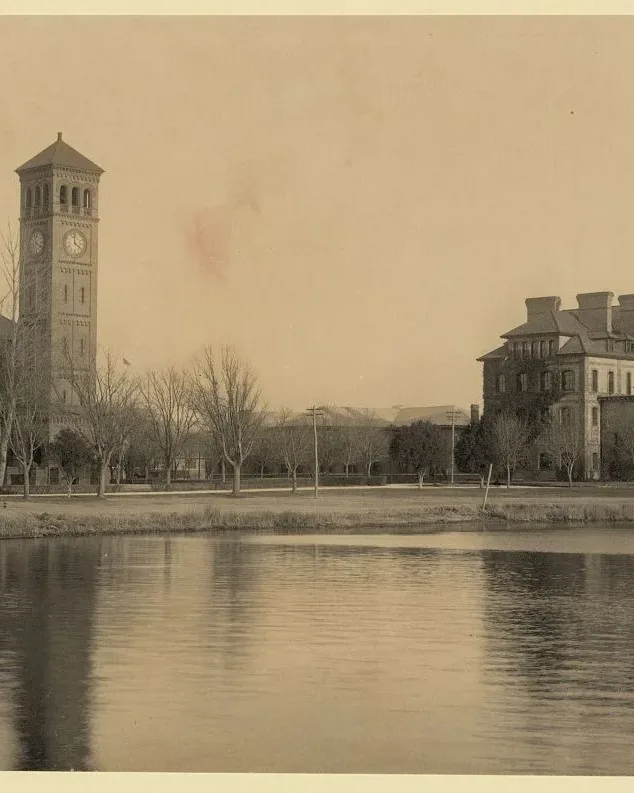
[Hampton Normal and Agricultural Institute, Hampton, Va.…
1899
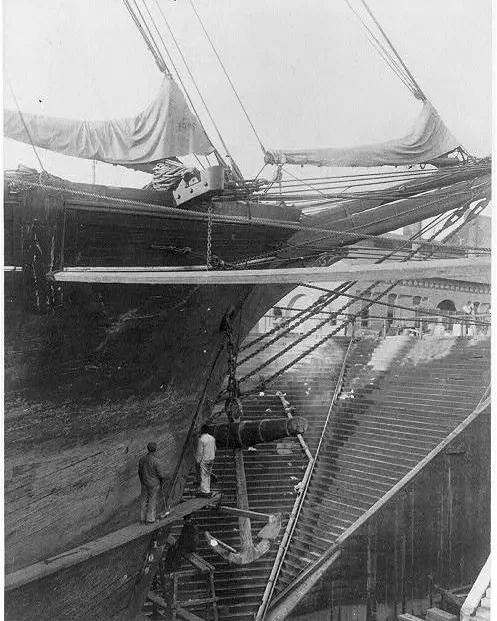
Negro students working at shipbuilding at the Newport News…
1899
Frequently asked questions
What is the Hampton Album?
It is the set of photographs Frances Benjamin Johnston made at Hampton Normal and Agricultural Institute in Virginia in December 1899 and January 1900. The Museum of Modern Art holds 159 platinum prints that were once bound as an album; the Library of Congress holds largely the same work.
Why did Frances Benjamin Johnston photograph Hampton Institute?
The school's principal, Hollis Burke Frissell, commissioned her in 1899 to document its students and buildings for the 1900 Paris Exposition, where the photographs were shown in the American Negro Exhibit.
Who is the Native American student in the history class photograph?
The Library of Congress identifies him as Louis Firetail of the Crow Creek Sioux. He stands in traditional dress beside a mounted eagle while classmates look on.
Who organized the American Negro Exhibit at the 1900 Paris Exposition?
Thomas J. Calloway, Daniel A. P. Murray and W. E. B. Du Bois. Johnston's Hampton photographs were displayed in it alongside Du Bois's data charts.
Where can I see the Hampton Album?
The Museum of Modern Art in New York holds the album prints, and the Library of Congress holds a large set of Johnston's Hampton photographs, many of them digitized. Several are in this archive.
Sources
- Library of Congress, Picture This blog: Frances Benjamin Johnston's Hampton Album, a researcher's exploration
- Clio Visualizing History: Frances Benjamin Johnston, Mosaic (Hampton Institute)
- Clio Visualizing History: Frances Benjamin Johnston exhibit introduction
- Encyclopedia Virginia: Crow Creek Sioux Tribal Member Wearing Traditional Clothing in American History Class
- Wikipedia: Frances Benjamin Johnston