Frances Benjamin Johnston's Most Famous Photographs
Frances Benjamin Johnston (1864–1952) opened a portrait studio in Washington, D.C., in 1894 and spent the next half century photographing almost everything: presidents and their families, schoolchildren, coal country, factories, gardens and the old buildings of the American South. The Library of Congress holds the bulk of her life's work, and a handful of her pictures are reproduced again and again in histories of photography, women's history and American education.
The pages below take those pictures one at a time: the self-portrait she made as a cigarette-holding "New Woman," her photographs of Hampton Institute shown at the 1900 Paris Exposition, the carriage photograph of President McKinley on the afternoon he was shot, her 1906 portrait of George Washington Carver and an early picture of child workers at a Pennsylvania coal breaker. Each page explains how the photograph was made, what it shows, why it is remembered and exactly which print this archive holds.
-
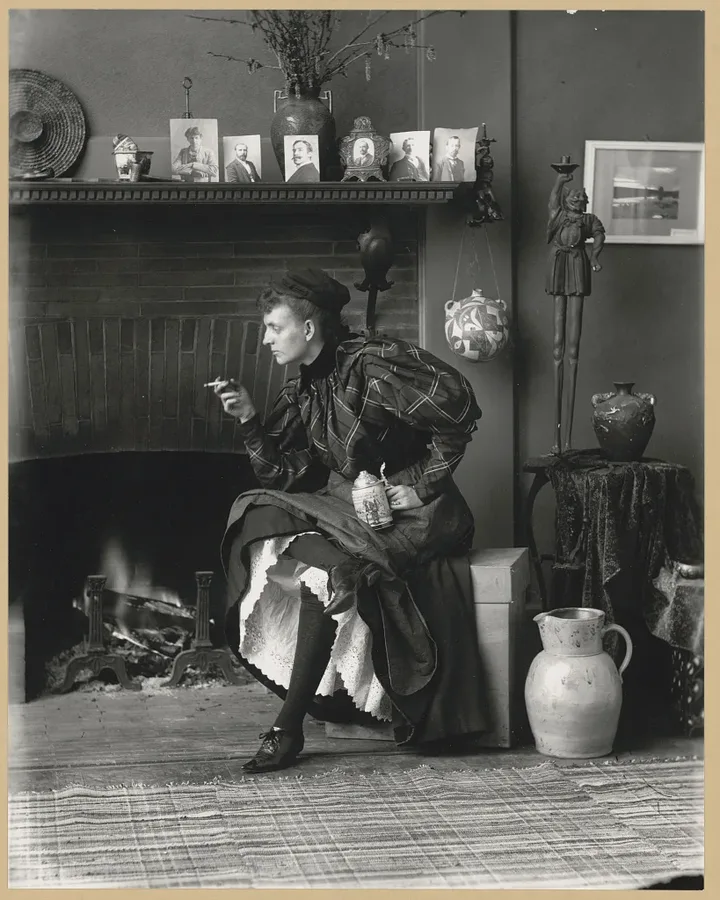
Self-Portrait as the "New Woman" (1896)
In this self-portrait, made in her Washington, D.C., studio around 1896, Frances Benjamin Johnston sits in profile before the fireplace with a cigarette in one hand and a beer stein in the other, her petticoat showing below her skirt. It is the most widely reproduced picture of the photographer and a classic image of the independent "New Woman" of the 1890s.
The story behind it → -
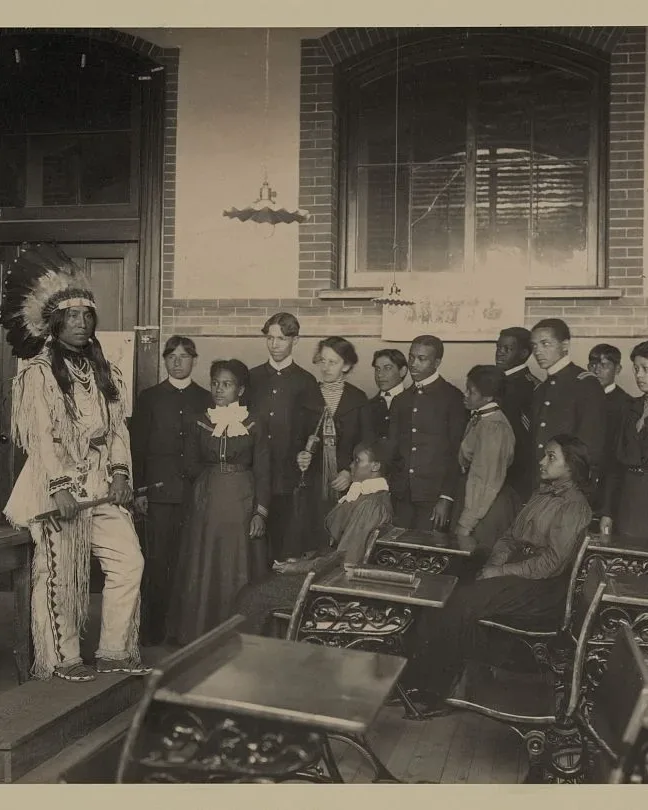
The Hampton Album: A Class in American History (1899–1900)
In December 1899 and January 1900 Frances Benjamin Johnston photographed classes, workshops and student life at Hampton Normal and Agricultural Institute in Virginia for display at the 1900 Paris Exposition. The series, known as the Hampton Album, is her most studied body of work. This page covers the series and its most discussed image, a history class in which Louis Firetail, a Crow Creek Sioux student, stands in traditional dress before his classmates.
The story behind it → -
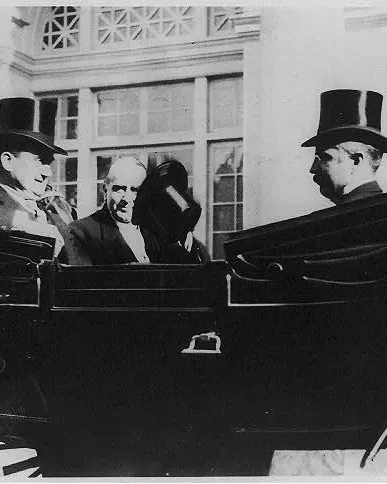
The Last Photograph of President McKinley (1901)
On the afternoon of September 6, 1901, Frances Benjamin Johnston photographed President William McKinley riding in an open carriage at the Pan-American Exposition in Buffalo, New York, on his way to a public reception at the Temple of Music. Within the hour he was shot there. The picture was later circulated as the last photograph ever taken of McKinley.
The story behind it → -
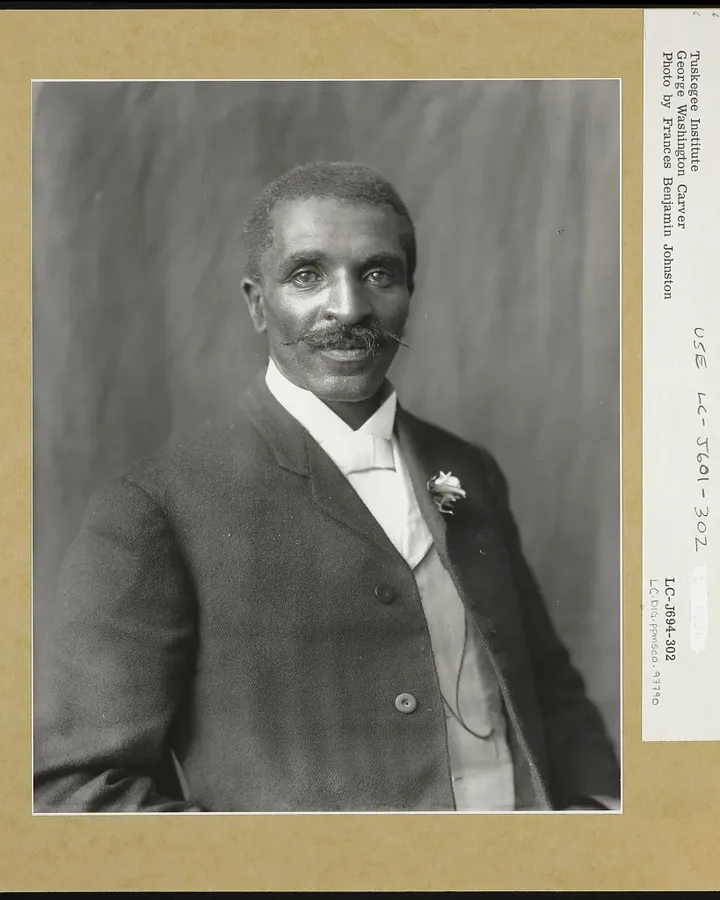
Portrait of George Washington Carver (1906)
In 1906 Frances Benjamin Johnston photographed the agricultural scientist George Washington Carver at Tuskegee Institute in Alabama. Her portraits are among the best-known early images of Carver and are widely reproduced in books and on the web. This page covers the half-length portrait held by the Library of Congress and presented here, and how it relates to her other pictures of him.
The story behind it → -
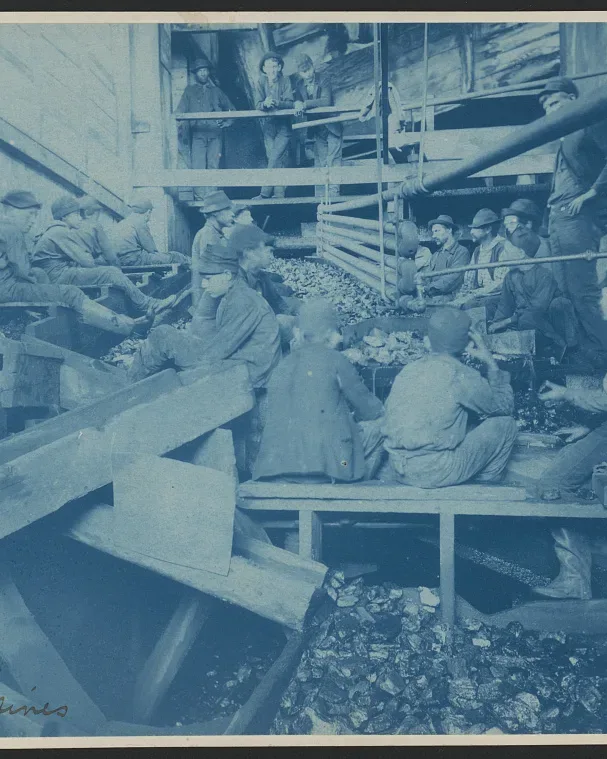
Breaker Boys in the Kohinoor Mine (1891)
In 1891 Frances Benjamin Johnston photographed breaker boys, children who picked slate from coal by hand, at the Kohinoor mine in Shenandoah, Pennsylvania. The blue cyanotype print in the Library of Congress is one of her earliest documentary pictures of industrial labor, made years before Lewis Hine's well-known breaker boy photographs.
The story behind it →